

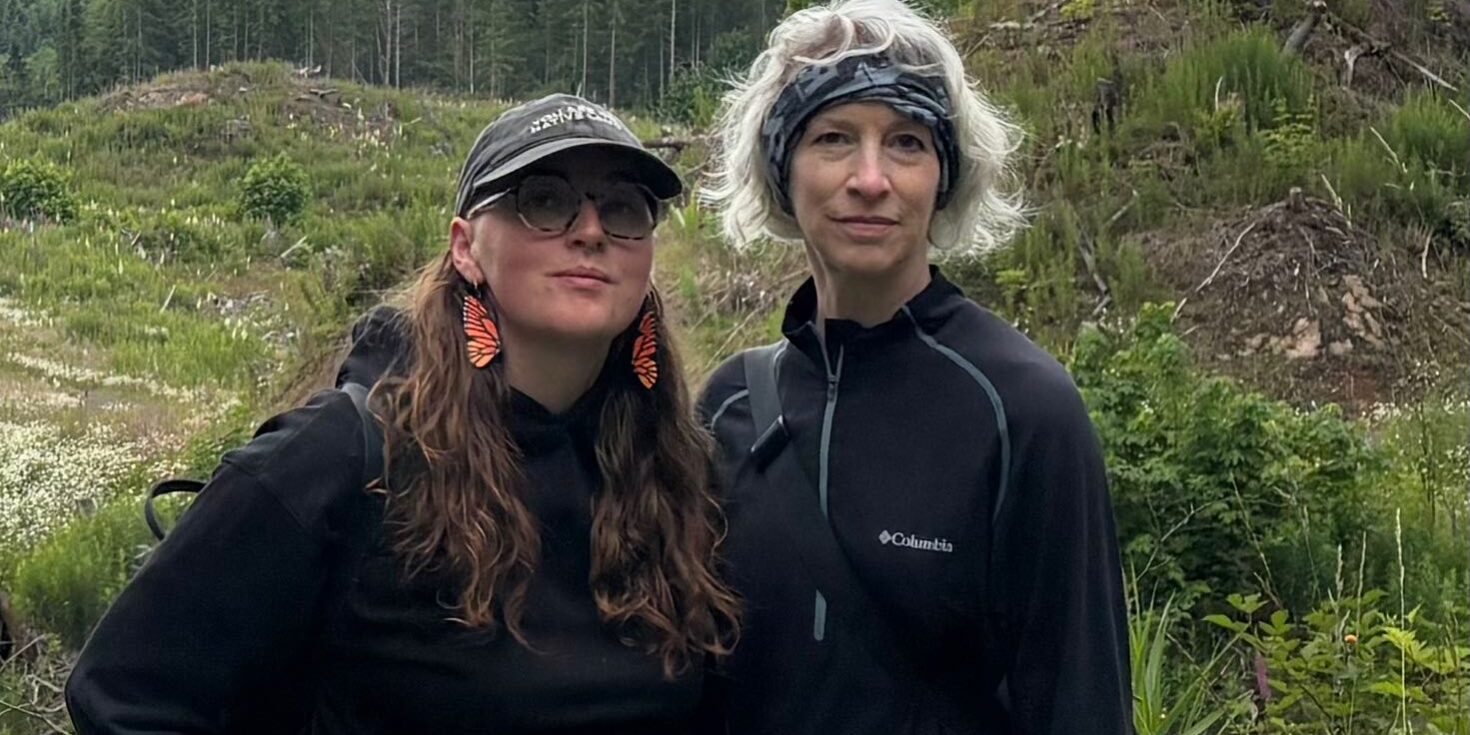
In the Local 20/20 column in the July 16, 2025 Port Townsend Leader, Angela Gyurko and Bear Belle share a broader perspective on our local water and how we all can reconnect with it.
By Bear Belle and Angela Gyurko
We turn a handle and water flows, covering our hands as we wash them, disappearing down the drain. Most of us don’t actively think about how precious that water is. Often, we lose sight of the value of a thing once it becomes routine. Some people in our county don’t have access to clean water, yet others have forgotten what water truly is: life.
According to National Geographic, only 1.2 percent of the earth’s water is suitable for drinking (https://education.nationalgeographic.org/resource/earths-fresh-water/). In Jefferson County, we can look towards the Olympic Mountains on a clear day and see our water stored in the snow that gleams in the sunshine.
In the 80’s, the Olympic snowpack never disappeared from view. Hiking to Appleton Pass, you’d see deep snow in the ravines and under the trees all summer. The October rains made only a slight dent in the snow before the temperatures froze again. Looking at the Olympics from the shoreline, snow was always there.
Our snowpack in 2025 is at 89 percent of historical averages, better than our 2024 snowpack of 60 percent, not as good as the 94 percent snowpack of 2023, but better than the 85 percent of 2022.
Maybe your eyes glazed over at the numbers, so think of this: for four years, our winter precipitation has not been enough to replenish the snowpack that supplies our summer water.
We drove to our reservoir and paused at the fence and barbed wire. When something is valuable, you guard it. There’s a distinction, however, between a valuable commodity for sale and a necessary life force to safeguard. “The Lakota phrase “Mní wičhóni” (Water is life) was the protest anthem from Standing Rock, but it also has a spiritual meaning rooted in Indigenous world views. For Native Americans, water does not only sustain life, it is sacred.” (2018 Bioneers Indigenous Forum Presentation) This empowering statement acknowledges the interconnectedness we see; every fauna and flora plays a critical role in our watershed.
Walking down the road, there are places where we hear the creek, but trees, ferns, and brambles shield the water from view. We can actively see our forest not only protecting the water but creating it. The trees carry rivers in their canopies. Autumn snows balance on branches and ferns, staying cold in the air rather than being absorbed into the still-warm earth. Spring rains get broken into mist rather than falling directly on the snow, stretching out the time before all the snow melts.
Watersheds in the Olympics are under attack, but barbed wire fencing can’t protect our water from plans to sell the forests essential to our water for timber. We see this along the Elwha River, which provides water to Clallam County. Public Lands Commissioner Upthegrove said the department’s scientists have seen no evidence that logging along the watershed approved by his predecessor will hurt Port Angeles’ water supply, although Port Angeles City Council members, environmental activists, and the Lower Elwha Klallam Tribe advise against it. In Serviceberry, author Robin Kimmerer states, “It pains me to know that an old-growth forest is “worth” far more as lumber than as the lungs of the Earth.” As we think about state plans to log Olympic forests and national discussions about selling National Forest land, we ask, “What actions can we as a community take to protect this sacred water?”
To support us all in reconnecting with our water, we ask the following:
1. Look at the snow on the Olympic Mountains each week. Can you still see it? Think about the snow, but not with a worry that it might go away for good, but with reverence and gratitude.
2. Seek out the streams and creeks that flow across this land. Watch Chimacum Creek flow under Rhody Drive and past H.J. Carroll Park. Can you imagine a future when the creek flows strongly throughout summer? Can you volunteer with community projects to restore the native habitat around our waterways?
3. Notice the forested hillsides and valleys preserving and filtering our water. Stay informed on efforts to log them.
4. Explore how gratitude can shape your use of water in and around where you live. Create space in your morning and bedtime washing rituals to think about water. Can we talk more about water use in the casual conversations we have as we move through our days?
Every drop of water is a gift. This summer, we challenge all of us to approach the dry days with a better appreciation for our water and for the mountains and forests that preserve this community-supporting life force.
Bio: Bear Belle and Angela Gyurko sit on the Local 20/20 Steering Council.