
In the Local 20/20 column in the September 10, 2025 Port Townsend Leader, Mary Hunt describes simple ways to start growing food and reduce your grocery bills. She also shares information about the incredible work of locals in growing food for the schools and the food banks. And if your fruit trees or veggie garden are overflowing right now, or if you have some time to give, she shares how you can help!
By Mary Hunt
What “tastes like home” to you? Does crunching into a tree-picked apple bring a rush of memories? Or is it the sweetness of the first sun-ripened cherry tomato? How about mixture of textures and flavors of a family favorite soup on a rainy NW day? All of the above become home-grown flavors when you plant something. Planting can also offset grocery bills as prices continue to climb.
Start small. What if “one pot dinners” started with herbs grown from one pot on your back deck? One pot doesn’t seem like much, but if that container had chives, thyme, oregano, basil, rosemary… (at $3 a tiny bundle) you’re on your way to saving money every week as well as adding nutrients and NW flavors into each meal. Give the extra to neighbors or to the Food Bank. When the herbs outgrow the pot, divide them up into new pots and give them out as presents along with your family secret recipe. Abundance grows friends, too.
How about something more down to earth — potatoes — they are easy to grow, prolific, and you already know how to cook them. The Makah Ozette variety is a high producing local favorite that’s a skinny, buttery version of the round Yukon Gold. Food Bank Director, Patricia Hennessey grew a few starts in a half barrel giving them little attention except for watering and was rewarded with 40 pounds of potatoes! Doug Van Allen grows Makah Ozettes at the Port Townsend High School garden. This year his team pulled 125 pounds out a 50 foot row. They let the potatoes dry for a couple of weeks to “cure” the skin, then brush off the dirt and store them in a cool, dry place for winter eating.
Did you inherit fruit trees on your property and have more fruit than you can use? Have your trees listed with the PT Gleaners who monitor over 300 backyard orchards. Every Saturday morning volunteers pick for a couple of hours then take boxes of fruit home while giving the abundance to the Food Banks and other non-profits. In October, volunteers also make 1600 pounds of apple sauce for the schools. Learn more at https://www.foodbankgrowers.org/gleaning.
Maybe you have a “zucchini problem”… the FoodBankGrowers have partnered with FreshFoodConnect.com a mobile app that lets you locate the food banks near you and the times they can take excess food, or check the jcfba.org website. The Food Bank Growers suggest you bring clean squash that’s smaller than your forearm to the food banks along with anything else you have washed and ready to eat.
If you don’t already have a garden, fall is the perfect time to dig up and make compost ready a “personal food bank” for 2026 — protect it from deer and bunnies, invite a neighbor to garden with you, and enjoy the bounty of time well spent together. The tiny 10 x 30 foot Food Bank Garden next to the Co-op produced 250 pounds of food last year of greens, beets, beans, peas, tomatoes, garlic, onions, herbs and more. Listen to KPTZ “In the Garden” series to hear what to do each month. Or sign up for GrowVeg.com to plan out your space for year around produce.
Being a hands on volunteer for the Food Bank Growers or PT Gleaners is another way to increase your growing/pruning knowledge base two hours at a time. Last year, between the two groups, over 29,533 pounds of produce were harvested of which 14,358 went directly into the school meals and the rest to the Food Banks and other organizations.
We are very lucky to be living under a temperate “green bubble” of perfect conditions for growing an abundance of fresh food. We have farms that can supply the majority of our needs, but wouldn’t it be nice to walk outside, pick something, and have it for dinner as well? Good taste begins at home.
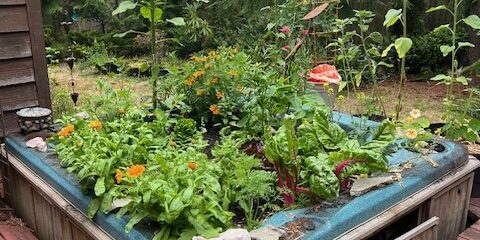
Photo: A hot tub turned mixed garden of flowers and vegetables by Mary Beth Haralovich.
Mary Hunt is a Food Bank Grower, Gleaner, and author of Interplanted: Growing Foodies from Scratch by the Port Townsend School Community.