
In the September 16, 2026 Port Townsend Leader Local 20/20 column, Cindy Jayne, along with others in Local 20/20, shared some of the highlights of the Global Earth Repair convergence that convened at Fort Worden this past Spring, and some of the follow up actions happening locally. See full article below.
By Cindy Jayne
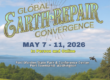
A thought-provoking conference took place in Port Townsend a few months ago – the Global Earth Repair Convergence. It brought in local, national, and international presenters in a hybrid conference to share best practices on how we can restore the planet with natural systems. Local 20/20 was a partner in the event, and we wanted to share some of our takeaways and follow up actions.
Leading off the event was a convening of First Nations people from near and far. Led by Shaayi Ananda, the Convergence created space for First Nations and knowledge keepers to gather, share wisdom, ceremony, and cultural practices, and collaborate across nations while educating the broader community. They set the tone for the reality of the devastating conditions we must all face in order to repair. The indigenous elders met in council each day and provided hope and inspiration about what is possible if we can focus on what we have in common and less on what makes us different.
One of the sobering talks at the convergence was Paul Cereghino’s discussion of the nine planetary boundaries that the Stockholm Resilience Centre tracks. They are scientifically defined guardrails that ensure Earth’s health. We’re all familiar with CO2 concentration (i.e. climate change), and ocean acidification related to that, but there are also boundaries related to freshwater changes, species extinction, forest cover, pollution from synthetic chemicals like plastics, nitrogen and phosphorous flows, ozone depletion and atmospheric aerosol loading. Many presentations and panels focused on solutions to the myriad of issues, including the roles of fungi, phytoplankton, seaweed, insects, and beavers in the biosphere; how to double and triple carbon stored in world soils; how to increase food production and ecosystem health with agroforestry; and the benefits of regenerative agriculture and aquaculture.
And there was much discussion on the shifts needed to adjust our economic systems to fund this work, including shifting the role of insurance companies, bioregional financing, and the Rights of Nature movement. Stuart Cowan from Buckminster Fuller Institute described the ARARA digital-finance platform that “connects technology, finance, and nature to restore balance – empowering people to regenerate the [Amazon] rainforest and stabilize the climate.”
One of the outcomes of the conference came from a meeting that was held after the conference with a variety of groups, including Local 20/20, which resulted in the Together Around Food Jefferson County plant-based meal two week program. The effort encourages folks to include more local, non-industrial plant-based food in their diet to improve planetary and personal health. It is continuing with biweekly potlucks, and has recently become a new Local 20/20 Action group under the Local Food umbrella, fitting well with its mission of local sustainability and resilience. Discussions at the convergence inspired a partnership between local systems strategist April Bartlett, permaculture educator Matthew Trumm, and the Jefferson County Food Bank Association to develop a whole-systems design and implementation workshop series for organizational and land-based learning, co-created with community members. Another result from the conference was the advancement of a local economic development initiative, focused on providing resources for small businesses and non-profits in the region. And much of the convergence was fodder for future discussion in the Local 20/20 Climate work group.
Overall, the convergence was both a wakeup call of all that is needed, and an inspirational sharing of on the ground projects that have made a difference. To learn more about the local follow on projects mentioned, contact us at info@l2020.org.
Bio: Cindy Jayne is a steering council member of Local 20/20 and leads its climate group. This article was a collaborative effort with others in Local 20/20.